Maintenance
Heating Tune-Up in Woodstock, GA
Heating season in north Georgia is short enough that a lot of systems go from October to February without anyone looking at them, and then fail on the first genuinely cold night. A fall tune-up checks the heat exchanger, the burners, the gas pressure, the flame signal, the venting, and takes a carbon monoxide reading before any of that becomes a January emergency.
What's included
- Heat exchanger inspected for cracks, rust-through and flame impingement
- Burner assembly cleaned, flame pattern and color checked
- Manifold gas pressure measured against the rating plate
- Igniter resistance measured, or pilot and thermocouple output tested
- Flame sensor cleaned and the microamp signal measured
- Inducer operation and pressure-switch verification
- Flue and vent connector checked for draft, disconnection, corrosion and clearance
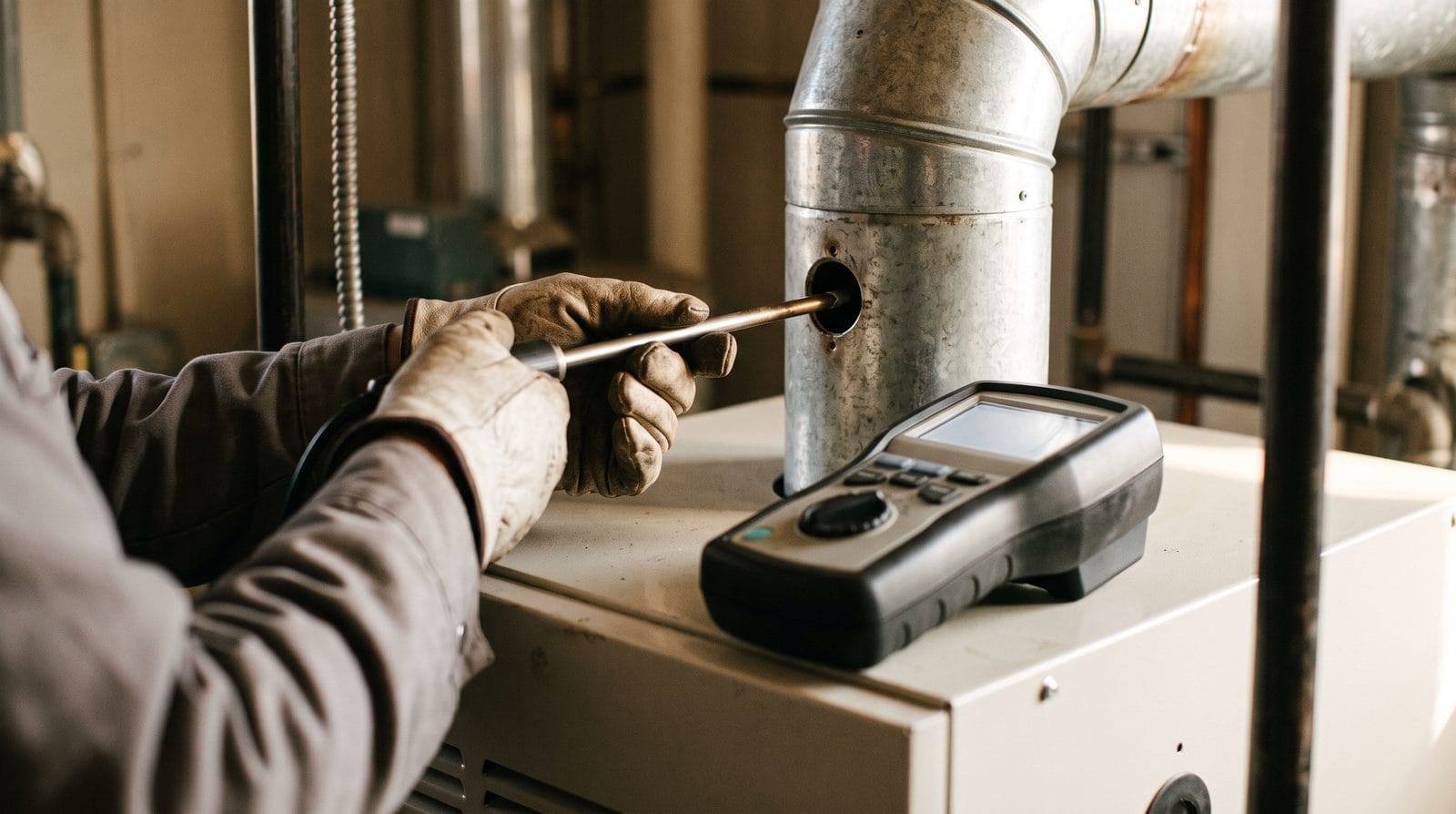
- Carbon monoxide spot reading at the return and around the appliance
How the visit actually goes
Combustion first, before anything gets cleaned
Readings taken on the system in the condition you have been running it in. Cleaning first and measuring after tells you about the clean, not about the winter you just had.
The heat exchanger gets a real look
Mirror and light, camera where the design allows, flame pattern watched through a full cycle with the blower running. This is the check that matters most and it is the one most often skipped on a discount tune-up.
Burners, ignition and gas pressure
Burners cleaned, flame sensor polished and its signal measured in microamps, igniter checked on a meter, and manifold pressure set against the rating plate rather than left wherever it was.
Venting, then the carbon monoxide reading
Draft confirmed, the connector checked for disconnection and corrosion, clearances verified, and a CO spot reading taken at the return and around the appliance before we leave. You get all of it written down.
Members skip the diagnostic fee.The Comfort Club
Questions people ask before booking
When should I book a heating tune-up?
September or October. The week of the first cold snap is the week everybody calls, and the technician who has already been to your house in October is not the one you need in January.
What does it cost?
A flat price per system, and it is included in every Comfort Club tier. We give you the number on the phone before we book it.
Do you check for carbon monoxide?
Yes, every heating visit, with a meter, at the return and around the appliance. It is not an add-on and it is not an upsell — it is the reason a heating tune-up is a different job from a cooling one.
My system is a heat pump. Is there anything to tune?
Yes, and it is a different list: defrost operation, reversing valve, backup heat staging and lockout, and the amp draw on each strip element. A heat pump that heats fine can still be costing you money through its backup heat, and that only shows up when somebody meters it.
Do I need a permit?
No. Maintenance is not permitted work.
Available across 10 towns in Cherokee County and the north metro. See where we work.
Book this service
Also in maintenance
- Air Conditioning Tune-UpNot a visual inspection and a filter change. Meters on it, and you get the readings.
- Furnace RepairIgniter, flame sensor, pressure switch or control board — four very different bills, diagnosed properly.
- Whole-Home HumidifiersHolds the whole house at a set humidity instead of a plug-in unit dragging one bedroom along.